Platelet Stabilizer
Provides a validated pre-analytical solution for flow cytometric analysis of human platelet activation. The stabilization reagent halts further ex vivo platelet activation immediately after specimen transfer, preserving CD62P (P-selectin) and other surface glycoprotein epitopes in their state at the time of collection — addressing the sample-handling delays that published studies have shown to cause artifactual platelet activation in flow cytometry.
Request Evaluation SampleCore capabilities
- Improved state stabilityInhibits platelet activation in vitro and maintains the platelet status present at the time of specimen collection.
- Extended sample validityStable for 7 days at room temperature (22–28°C), enabling domestic multi-site collection and transport without cold chain. Also stable at 2–8°C for applications requiring refrigerated or international shipment.
- Simple transfer workflowCollect a specimen into a standard 3.2% sodium citrate tube, then use a calibrated pipette to add 0.5 mL of specimen to the Platelet Stabilizer. Gently invert 5 to 8 times to mix. The stabilization solution is supplied ready to use — no reagent preparation.
- Multi-scenario applicationsSuitable for research experiments, multi-center studies, and settings requiring extended storage or long-distance transport.
Research settings
Research Laboratories
Sample preparation for platelet flow cytometry at research institutions and academic laboratories.
Research Platform
Platelet function research, drug screening, and sample processing for related research studies.
Multi-Center Projects
Standardized processing of samples requiring extended storage or transport across multiple collection sites.
Workflow
Collect & Transfer
Collect a specimen into a standard 3.2% sodium citrate vacuum collection tube using standard venipuncture technique for research specimen collection. Within 5 minutes of collection, use a calibrated pipette to add 0.5 mL of specimen from the citrate collection tube to the Platelet Stabilizer.
Mix
Gently invert the vial 5 to 8 times to ensure thorough mixing of the specimen with the stabilization solution. Do not shake.
Store / Analyze
Store at room temperature (22–28°C) or refrigerated (2–8°C). Samples remain stable for up to 7 days under either condition. No cold chain required for shipping at room temperature; refrigerated conditions (2–8°C) suitable for applications requiring refrigerated or international shipment.
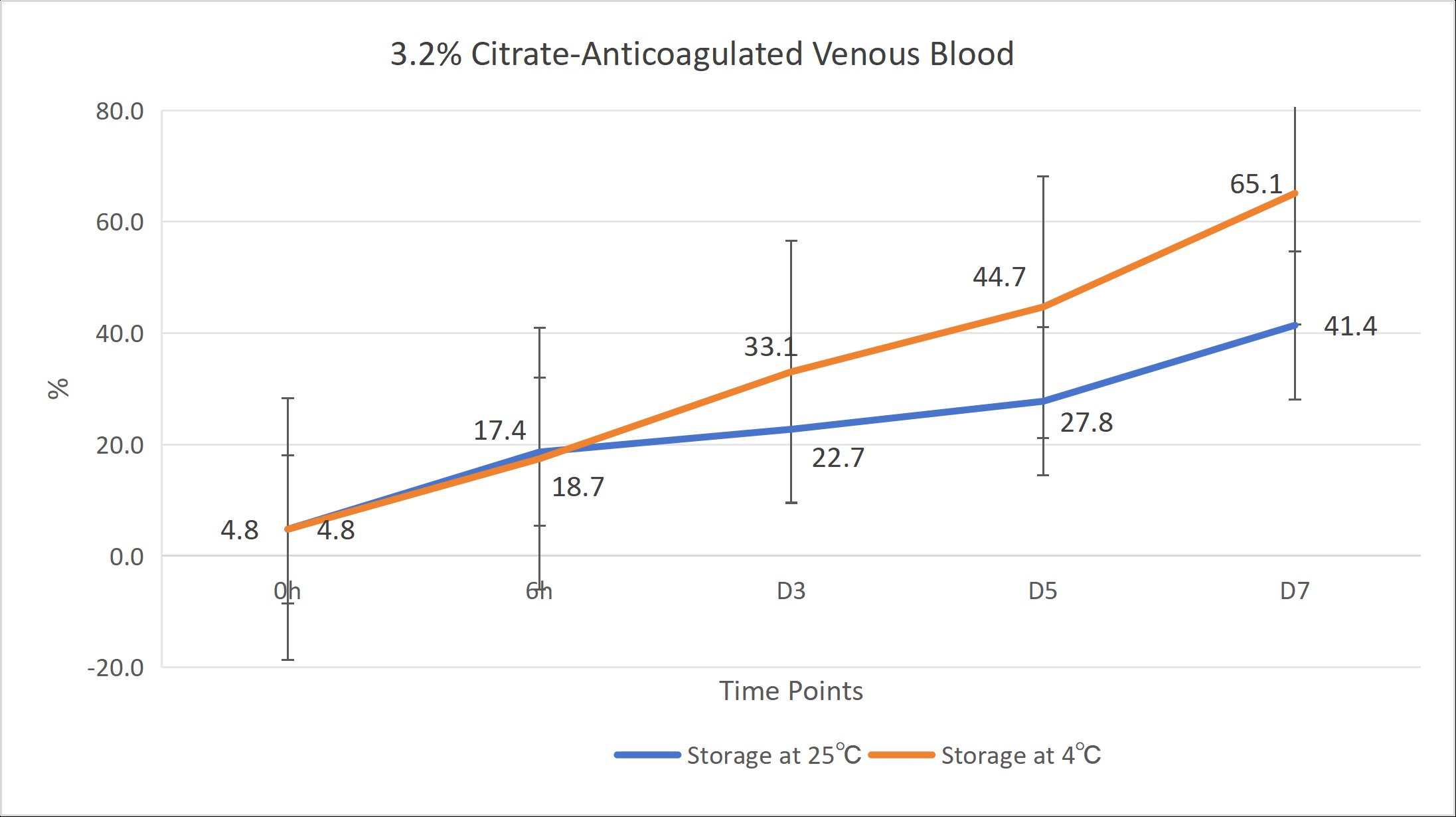
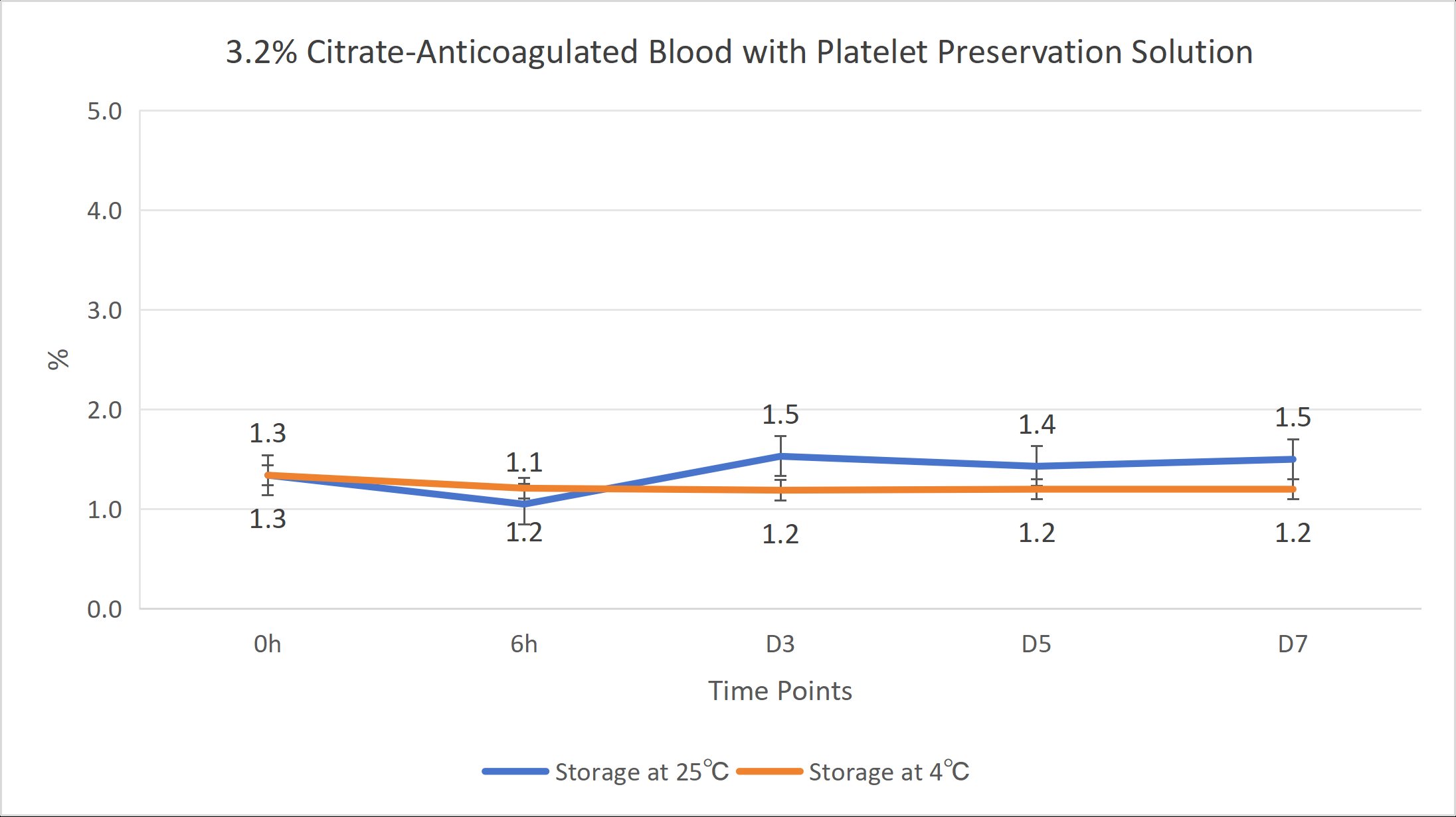
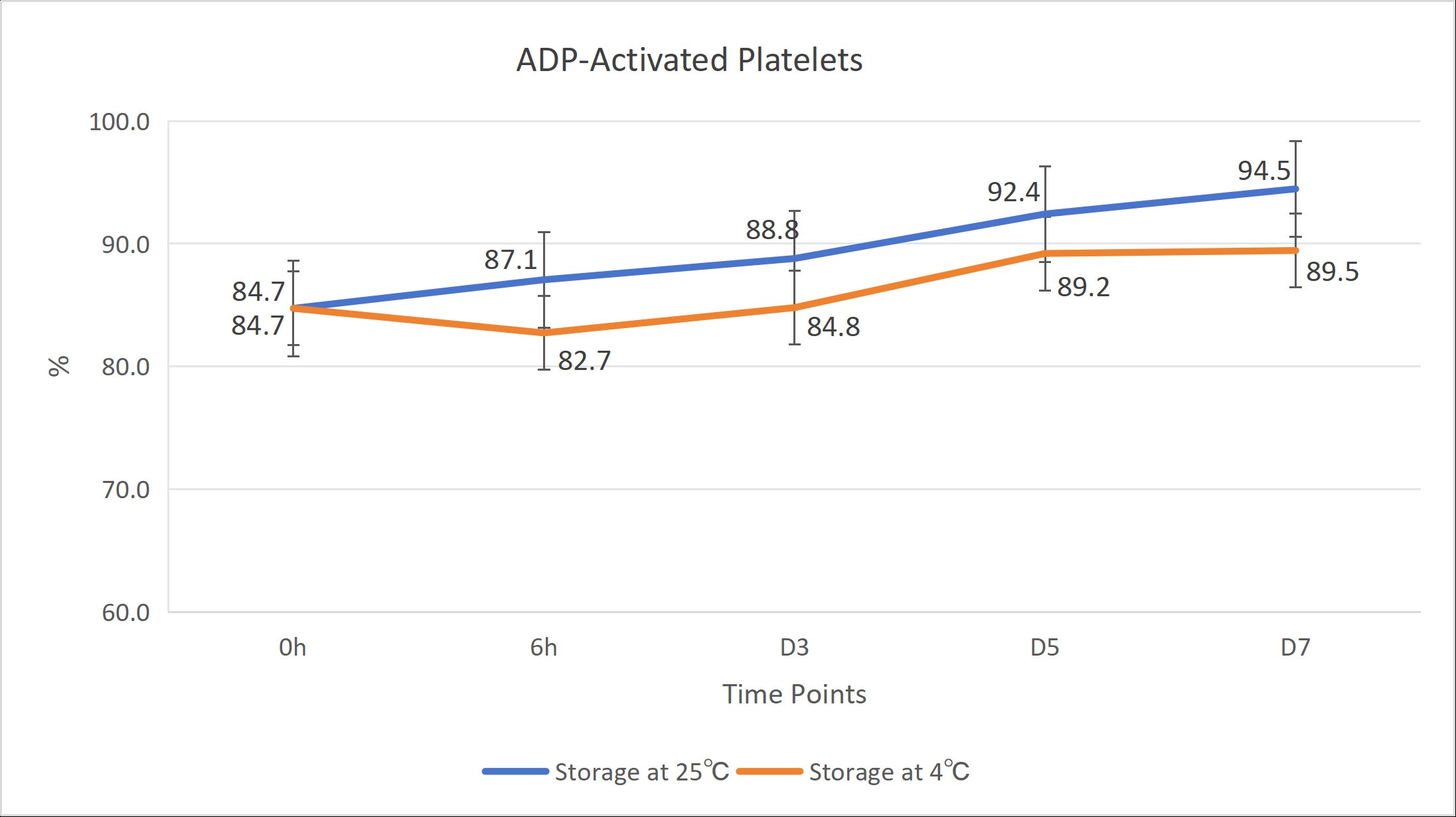
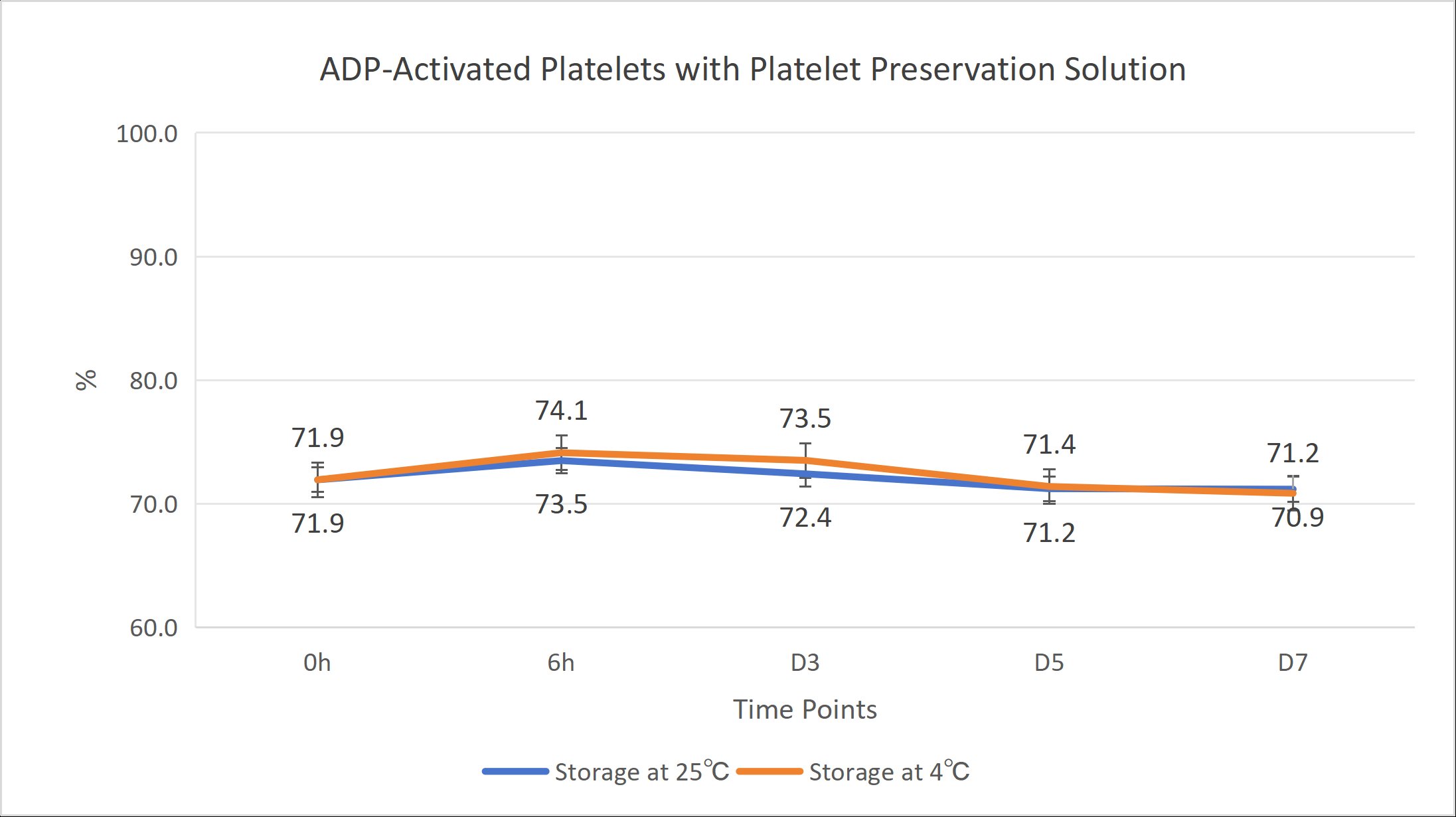
CD62P stability over 7 days
Internal validation study. Venous specimens from healthy donors collected into 3.2% sodium citrate tubes, transferred into Platelet Stabilizer vials, and monitored by multicolor flow cytometry at 22–28°C and 2–8°C. n = 10 healthy donors. SD <2%.
CD62P scatter plots — representative sample
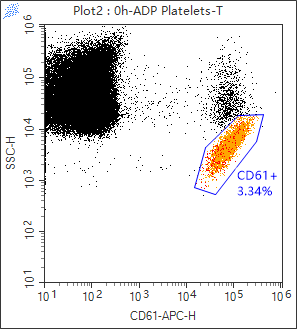
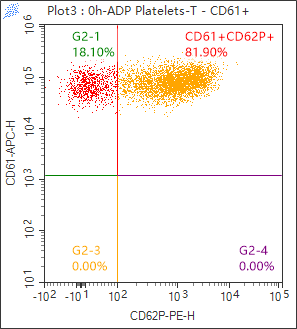
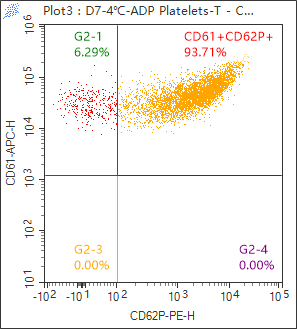
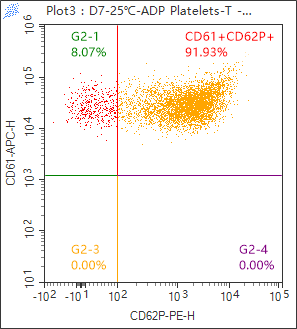
Multicolor flow cytometry. CD61/SSC gating followed by CD62P-PE vs CD61-APC analysis. Select a figure to view. Click thumbnails to switch between panels.
Fig. 2B — 3.2% Citrate + Platelet Stabilizer
CD62P remains below 1.1% through Day 7 at both temperatures. The platelet cloud stays entirely in the CD62P-negative quadrant — indistinguishable from the baseline reading.
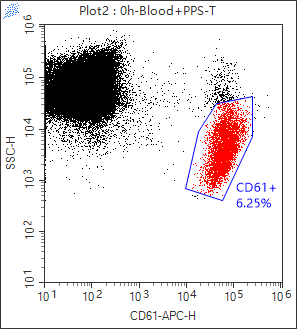
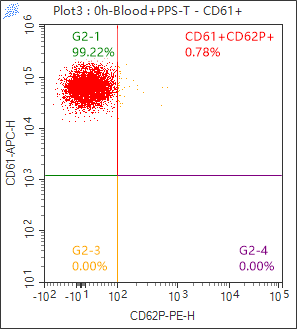
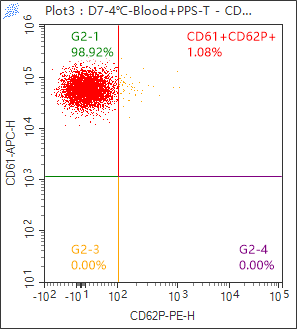
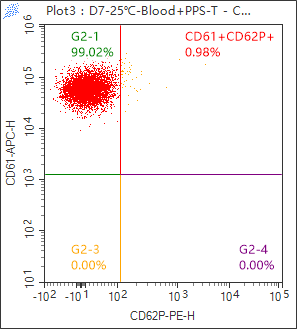
Fig. 2A — 3.2% Citrate-Anticoagulated Venous Specimen (Control)
Progressive ex vivo activation clearly visible. By Day 7, the CD62P-positive cloud has expanded dramatically — the sample no longer reflects the donor's in vivo platelet state.
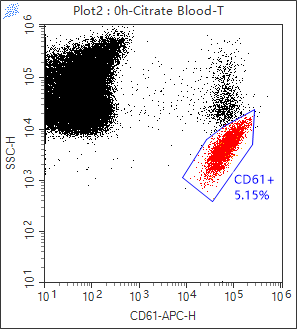
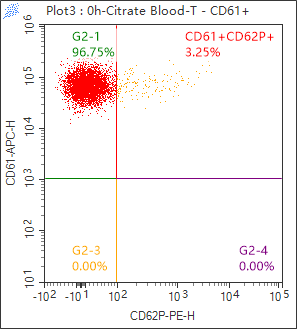
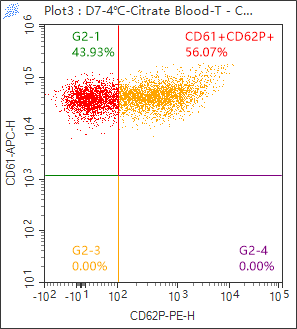
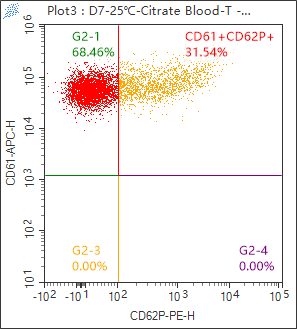
Fig. 2D — ADP-Activated Platelets + Platelet Stabilizer
The Platelet Stabilizer locks in the activation state present at time of transfer. ADP-activated signal stable at ~72% through Day 7 at both temperatures — no drift.
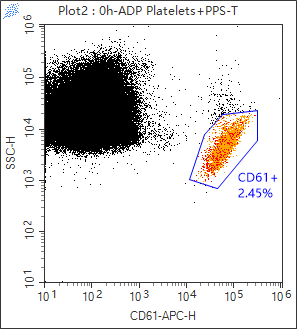
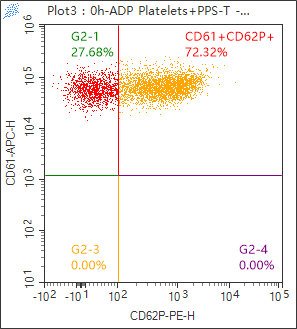
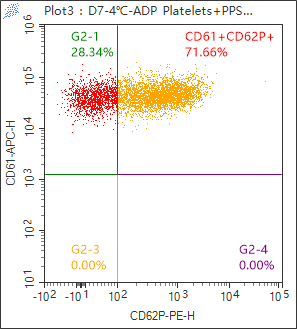
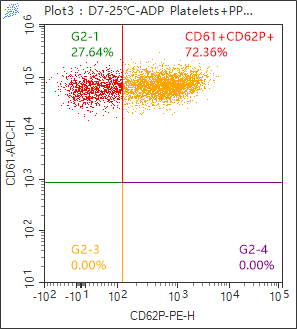
Fig. 2C — ADP-Activated Platelets, Citrate Tube (Control)
ADP-activated platelets in standard citrate continue to drift upward — from 81.9% at baseline to 93.71% at Day 7 / 4°C. The activation state is not preserved.
- For Research Use Only. Not for use in diagnostic procedures.
- Performance data established using samples from healthy donors. Performance in samples from subjects with underlying platelet abnormalities, active coagulopathy, or anticoagulant therapy has not been independently evaluated in this study.
- Designed to preserve platelets' basal activation status, protecting against the artifactual activation that begins once platelets leave the body. If agonist stimulation is required, agonist must be added to citrate-anticoagulated specimen prior to transfer into the Platelet Stabilizer.
- Specimen must be transferred within 5 minutes of specimen collection.
Selected literature on platelet flow cytometry
pre-analytical standardization
The following publications highlight the scientific rationale for standardized platelet sample handling.
These publications are cited as background literature relevant to the pre-analytical challenges addressed by the Platelet Stabilizer. IntelliFlow TECH LLC is not affiliated with the authors.
Common questions
Must the specimen be transferred within 5 minutes?
Yes. Transfer from the citrate tube to the Platelet Stabilizer should occur within 5 minutes of collection to minimize ex vivo platelet activation before stabilization.
How should filled vials be shipped?
Filled vials can be shipped at ambient temperature (22–28°C) for up to 7 days, or at 2–8°C for refrigerated or international shipment. Ship filled vials according to institutional policies, carrier requirements, and applicable regulations based on the specimen risk assessment. Use leak-proof secondary containers and absorbent material.
Can I use any flow cytometer?
Yes. The Platelet Stabilizer is compatible with all major flow cytometer platforms and antibody vendors. No special instrument settings are required.
| Product name | IntelliFlow™ Platelet Stabilizer |
| Catalog number | ZK202605 |
| Transfer volume | 0.5 mL specimen |
| Shelf life (unopened) | 24 months at 22–28°C · Do not freeze · Protect from direct sunlight |
| Post-transfer stability | 7 days at 22–28°C (room temperature) or 2–8°C (refrigerated) |
| Package size | 12 vials per pack |
| Compatibility | All major flow cytometers · all major antibody vendors |
| Regulatory status (US) | For Research Use Only · Not for use in diagnostic procedures |
| Labeling | English labeling · English Instructions for Use (IFU) |